
Bedford’s New Rhythm: The Projects Quietly Redrawing the Town
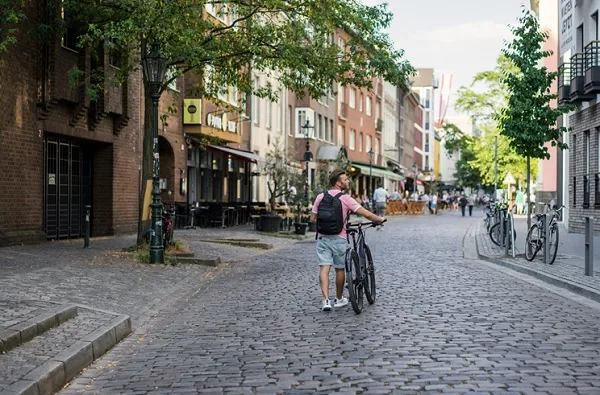
Bedford is not being changed by a single spectacular development. It is being redrawn by a set of projects that alter how people arrive, cross the centre, pause, spend time and head home again. That is the more useful way to read the town now. Places do not truly change when a rendering appears online or a ribbon is cut. They change when movement patterns change first, and Bedford is now at that stage.
The key insight is simple: the biggest impact often comes from the least glamorous decisions. A widened footway, a cleaner station approach, a better crossing, a junction that no longer feels hostile; these are the things that remove dead time from daily life. They reduce awkward transitions, shorten hesitation points and make the centre easier to use in fragments rather than as one long visit. Once that happens, shops, events, cafés and digital habits all start to reorganise around a quicker rhythm.
The Route Is the Real Story
That is why St Paul’s Square, Harpur Square, Midland Road and Dame Alice Street matter so much. The latest town-centre update says the square works have widened pedestrian routes, added a segregated cycleway, introduced new planting and changed traffic movements with a new right turn to the Embankment. Midland Road has been upgraded as a safer, more accessible station-to-centre corridor, while Dame Alice Street is being rebuilt with a protected cycle lane, better crossings and improved traffic signals. None of that sounds dramatic in isolation. Put together, it means Bedford is trying to make the town centre feel easier, quicker and more natural to move through.
Greyfriars may prove even more important than the square works. The junction reconfiguration began in January 2026 and is due to continue through autumn 2026, with the council presenting it as a safer gateway for pedestrians, cyclists and buses while also opening development opportunities around the former police station site and toward Midland Road. That is a classic regeneration tell. When a town redesigns a junction, it is rarely only fixing traffic; it is usually trying to improve land value, first impressions and future footfall at the same time.
The Quieter Projects May Change Bedford for Longer
The smartest Bedford projects are the ones trying to turn the centre into an all-day place rather than a daytime errand zone. Mayes Yard is a strong example. Plans for the area point to a mixed-use scheme with homes, retail, leisure and commercial space, while also re-providing the library and expanding the Corn Exchange. The Corn Exchange itself is already moving through a major refurbishment designed to improve the venue and strengthen future income. That matters because a longer-living town centre depends on physical infrastructure, cultural programming and a digital layer that keeps people connected to what is happening.
Universal and East West Rail sit on a different scale, but they sharpen the same question: what kind of place is Bedford becoming between journeys? Universal has already shifted outside attention toward the area, while East West Rail could change how Bedford fits into a much wider regional map. At the same time, major transport upgrades bring pressure, disruption and difficult local trade-offs. Bedford’s future is not just about growth; it is about how much friction the town absorbs while trying to become more connected.
How the New Town Rhythm Spills Into Digital Leisure
Once routes become smoother, daily life breaks into shorter, cleaner intervals. A station walk takes less effort, a bus change feels less clumsy, and a square becomes somewhere you can pause without treating it as a full outing. That fragmented rhythm is exactly where low-friction mobile entertainment tends to grow. In that setting, bd casino works as part of a quick digital routine rather than a separate destination, because the appeal is the same as the appeal of a better route: less resistance, faster access and an easy return after a pause. Bedford’s physical upgrades do not create digital leisure on their own, but they do create the kind of day in which short mobile sessions feel more natural than they used to.
What Smart Bedford Residents Should Watch Next
The best local trick is not to stare only at the headline projects. Watch the seams instead. Watch whether the station-to-centre walk feels noticeably better at commuter hours. Watch whether event nights at the Corn Exchange keep people in town later. Watch whether Greyfriars starts acting as a gateway rather than a bottleneck. Those are the signals that tell you whether Bedford is merely rebuilding space or actually changing behaviour.
That behavioural shift matters for sport too. When movement becomes easier and event traffic grows denser, more fans check line-ups, scores and markets while they are already on the move. At that point, mobile betting stops feeling like an extra tab on the phone and starts becoming part of the routine itself. In practice, melbet apk download fits that faster pattern because it belongs to the same phone-based habit as alerts, team news and live match tracking. The more Bedford’s daily rhythm speeds up in short, usable bursts, the more natural that kind of mobile sports use becomes.
More Than a New Look
That is the real test for Bedford over the next few years. A town is not transformed just because new paving appears or a transport scheme moves forward. It changes when people begin using time differently, moving differently and staying in the centre for different reasons. If Bedford gets that right, the projects now under way will do more than improve appearances. They will give the town a new rhythm.